How Many Countries Are in Africa? All 54 Countries & Capitals
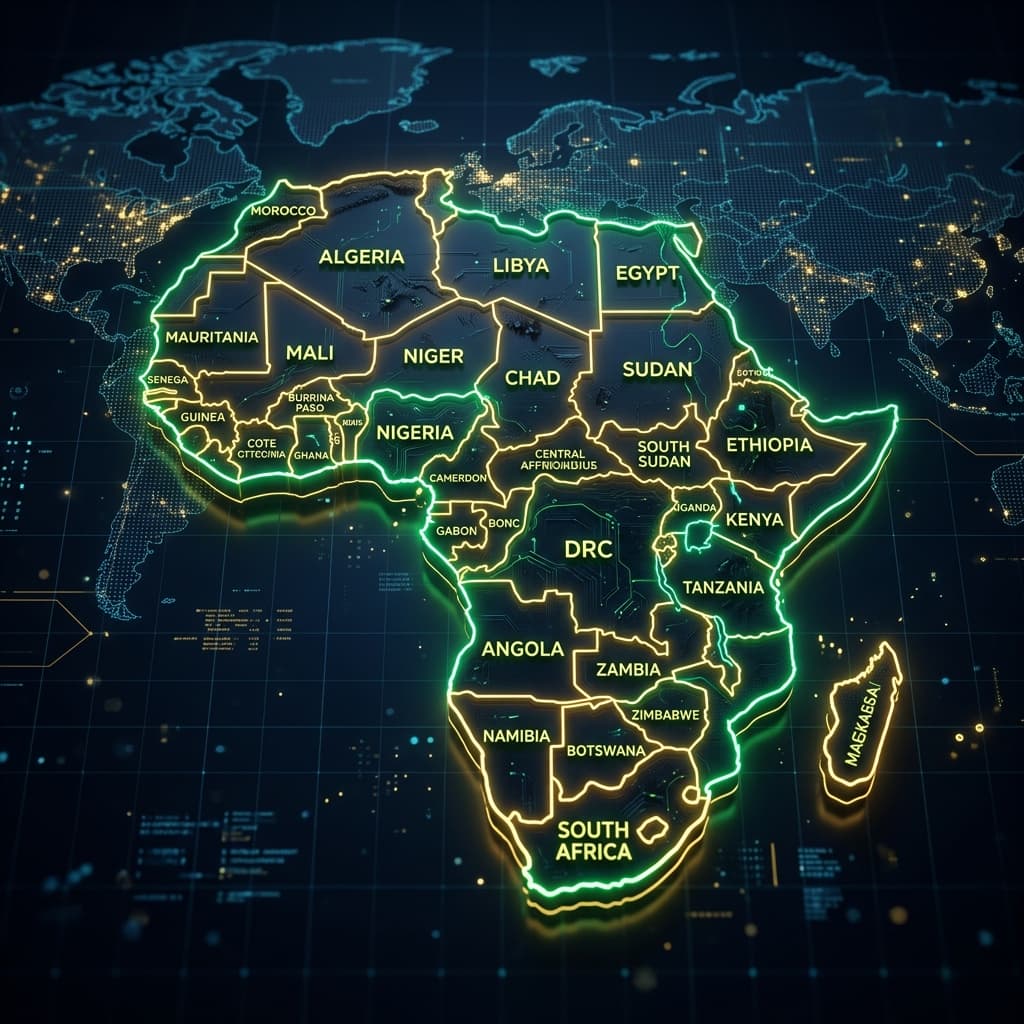
Africa has 54 countries, making it the continent with the most nations in the world. That is more than Europe (44), Asia (49), North America (23), South America (12), or Oceania (14).
These 54 countries are all recognized by the United Nations and are members of the African Union. They span an enormous continent — 30.37 million square kilometers, roughly three times the size of Europe — and are home to approximately 1.6 billion people as of 2026.
Yet despite its size and importance, Africa is the continent that most people know the least about. Studies from quiz platforms show that the average person can name only about 10 to 15 African countries from memory. Small nations like São Tomé and Príncipe, Eswatini, and Comoros are missed by over 35% of geography quiz players.
At World Guesser, Africa is consistently the hardest continent in our daily geography challenge. Our team works with African country data, flags, and locations every day, and that expertise shaped this guide.
Wait — Is It 54 or 55 Countries?
Before we start, let us address the most common confusion. You will sometimes see the number 55 instead of 54. Here is why:
The United Nations recognizes 54 African member states. This is the standard number used by most sources worldwide.
The African Union recognizes 55 member states. The extra country is the Sahrawi Arab Democratic Republic (Western Sahara). This is a disputed territory in northwest Africa, claimed by Morocco. The AU recognizes it as an independent state, but the UN does not list it as a member.
For this guide, we use the UN standard of 54 countries. We mention Western Sahara where relevant.
Is Africa a country? Why do so many people think it is?
No. Africa is a continent — the second largest and second most populous in the world. It contains 54 independent countries, over 3,000 languages, and extraordinary cultural diversity.
The misconception that Africa is a single country comes from limited media coverage that treats the continent as a monolith, and the tendency to group all 54 nations under a single label.
Africa is no more a single country than Europe is. Just as France, Germany, and Norway are distinct European nations, Nigeria, Kenya, and South Africa are distinct African nations — each with its own government, economy, languages, and culture.
Complete List of All 54 African Countries and Capitals
Here is the full alphabetical list of every African country, its capital city, its region, and its approximate population in 2026.
| # | Country | Capital | Region | Population (est.) |
|---|---|---|---|---|
| 1 | Algeria | Algiers | North | 46M |
| 2 | Angola | Luanda | Southern | 37M |
| 3 | Benin | Porto-Novo | West | 14M |
| 4 | Botswana | Gaborone | Southern | 2.6M |
| 5 | Burkina Faso | Ouagadougou | West | 24M |
| 6 | Burundi | Gitega | East | 13M |
| 7 | Cabo Verde | Praia | West | 600K |
| 8 | Cameroon | Yaoundé | Central | 29M |
| 9 | Central African Republic | Bangui | Central | 5.5M |
| 10 | Chad | N'Djamena | Central | 18M |
| 11 | Comoros | Moroni | East | 920K |
| 12 | Congo (Republic of the) | Brazzaville | Central | 6M |
| 13 | Congo (Democratic Republic of the) | Kinshasa | Central | 105M |
| 14 | Côte d'Ivoire | Yamoussoukro | West | 29M |
| 15 | Djibouti | Djibouti | East | 1.1M |
| 16 | Egypt | Cairo | North | 106M |
| 17 | Equatorial Guinea | Ciudad de la Paz | Central | 1.7M |
| 18 | Eritrea | Asmara | East | 3.7M |
| 19 | Eswatini | Mbabane | Southern | 1.2M |
| 20 | Ethiopia | Addis Ababa | East | 130M |
| 21 | Gabon | Libreville | Central | 2.4M |
| 22 | Gambia | Banjul | West | 2.7M |
| 23 | Ghana | Accra | West | 34M |
| 24 | Guinea | Conakry | West | 14M |
| 25 | Guinea-Bissau | Bissau | West | 2.2M |
| 26 | Kenya | Nairobi | East | 56M |
| 27 | Lesotho | Maseru | Southern | 2.3M |
| 28 | Liberia | Monrovia | West | 5.4M |
| 29 | Libya | Tripoli | North | 7M |
| 30 | Madagascar | Antananarivo | East | 30M |
| 31 | Malawi | Lilongwe | East | 21M |
| 32 | Mali | Bamako | West | 24M |
| 33 | Mauritania | Nouakchott | North | 4.9M |
| 34 | Mauritius | Port Louis | East | 1.3M |
| 35 | Morocco | Rabat | North | 38M |
| 36 | Mozambique | Maputo | East | 34M |
| 37 | Namibia | Windhoek | Southern | 2.6M |
| 38 | Niger | Niamey | West | 27M |
| 39 | Nigeria | Abuja | West | 230M |
| 40 | Rwanda | Kigali | East | 14M |
| 41 | São Tomé and Príncipe | São Tomé | Central | 230K |
| 42 | Senegal | Dakar | West | 18M |
| 43 | Seychelles | Victoria | East | 100K |
| 44 | Sierra Leone | Freetown | West | 8.6M |
| 45 | Somalia | Mogadishu | East | 18M |
| 46 | South Africa | Pretoria | Southern | 60M |
| 47 | South Sudan | Juba | East | 11M |
| 48 | Sudan | Khartoum | North | 48M |
| 49 | Tanzania | Dodoma | East | 67M |
| 50 | Togo | Lomé | West | 9M |
| 51 | Tunisia | Tunis | North | 12M |
| 52 | Uganda | Kampala | East | 49M |
| 53 | Zambia | Lusaka | Southern | 20M |
| 54 | Zimbabwe | Harare | Southern | 16M |
For the complete list of all 195 countries worldwide, see our countries and capitals list.
African Countries by Region
The African Union divides the continent into five geographic regions. Learning countries by region is a highly effective study strategy.
North Africa — 6 Countries
ALGERIA, EGYPT, LIBYA, MAURITANIA, MOROCCO, TUNISIA.
North Africa is dominated by the Sahara Desert — the largest hot desert in the world, roughly the same size as the US. The region is predominantly Arabic-speaking and has strong ties to the Middle East. Egypt is the third most populous country in Africa with over 106 million people.
West Africa — 15 Countries
BENIN, BURKINA FASO, CABO VERDE, CÔTE D'IVOIRE, GAMBIA, GHANA, GUINEA, GUINEA-BISSAU, LIBERIA, MALI, NIGER, NIGERIA, SENEGAL, SIERRA LEONE, TOGO.
West Africa is the most populous region, largely due to Nigeria. Nigeria has approximately 230 million people, making it the most populous country in Africa and the sixth most populous in the world. By 2050, Nigeria is projected to surpass the US in population.
East Africa — 16 Countries
BURUNDI, COMOROS, DJIBOUTI, ERITREA, ETHIOPIA, KENYA, MADAGASCAR, MALAWI, MAURITIUS, MOZAMBIQUE, RWANDA, SEYCHELLES, SOMALIA, SOUTH SUDAN, TANZANIA, UGANDA.
East Africa has the most countries (16) and contains famous landmarks like Mount Kilimanjaro (Tanzania), the Serengeti, the Great Rift Valley, and the island of Madagascar. Ethiopia is the region's giant with 130 million people — the second most populous country in Africa.
Central Africa — 8 Countries
CAMEROON, CENTRAL AFRICAN REPUBLIC, CHAD, CONGO (REP.), DR CONGO, EQUATORIAL GUINEA, GABON, SÃO TOMÉ AND PRÍCIPE.
Central Africa contains the Congo Basin, the world's second-largest rainforest. The Democratic Republic of the Congo (DRC) is by far the largest country in the region, covering 2.34 million km² with over 105 million people.
Southern Africa — 8 Countries
ANGOLA, BOTSWANA, ESWATINI, LESOTHO, NAMIBIA, SOUTH AFRICA, ZAMBIA, ZIMBABWE.
Southern Africa is the most economically developed region. South Africa has the second-largest economy (after Nigeria by GDP) and developed infrastructure. The region includes two enclave scenarios: Lesotho (surrounded by South Africa) and Eswatini.
Why are there three different Guineas in Africa?
Guinea, Guinea-Bissau, and Equatorial Guinea are three separate, unrelated countries that share a word in their names. The word "Guinea" likely comes from a Berber term meaning "land of the Black people," which European colonizers applied broadly to the West African coast.
Guinea (capital: Conakry) was a French colony. Guinea-Bissau (capital: Bissau) was a Portuguese colony. Equatorial Guinea (capital: Ciudad de la Paz) was a Spanish colony — making it the only Spanish-speaking country in Africa.
Landlocked, Coastal, and Island Countries of Africa
Africa's 54 countries can also be grouped by their access to the ocean. This matters because landlocked countries face significantly higher trade costs because they must ship goods through neighboring countries to reach a port.
| Type | Count | Countries |
|---|---|---|
| Landlocked | 16 | Botswana, Burkina Faso, Burundi, Central African Republic, Chad, Ethiopia, Eswatini, Lesotho, Malawi, Mali, Niger, Rwanda, South Sudan, Uganda, Zambia, Zimbabwe |
| Coastal | 32 | All mainland countries with a coastline |
| Island nations | 6 | Cabo Verde, Comoros, Madagascar, Mauritius, São Tomé and Príncipe, Seychelles |
Why are so many African countries landlocked?
The main reason is colonial border-drawing. When European powers divided Africa among themselves at the Berlin Conference of 1884-85, they drew straight lines on maps using administrative borders. Transport costs in landlocked African countries are more than double those of coastal neighbors.
Ethiopia is a particularly interesting case. It had a coastline until 1993, when Eritrea gained independence and took the entire Red Sea coast with it, making Ethiopia landlocked overnight.
How Africa Got 54 Countries: A Brief History of Decolonization
Most of Africa's 54 countries are younger than you might think. The majority gained independence from European colonial powers in the 1950s and 1960s.
The Scramble for Africa
At the Berlin Conference of 1884-85, 14 European nations divided nearly the entire continent among themselves. By 1914, over 90% of Africa was under European colonial control:
| Colonial Power | Countries Colonized | Count |
|---|---|---|
| France | Algeria, Benin, Burkina Faso, Cameroon, CAR, Chad, Comoros, Congo, Côte d'Ivoire, Djibouti, Gabon, Guinea, Madagascar, Mali, Mauritania, Morocco, Niger, Senegal, Togo, Tunisia, and others | ~25 |
| United Kingdom | Botswana, Egypt, Eswatini, Gambia, Ghana, Kenya, Lesotho, Malawi, Nigeria, Sierra Leone, South Africa, Sudan, Tanzania, Uganda, Zambia, Zimbabwe, and others | ~19 |
| Portugal | Angola, Cabo Verde, Guinea-Bissau, Mozambique, São Tomé and Príncipe | 5 |
| Belgium | Burundi, DR Congo, Rwanda | 3 |
| Spain | Equatorial Guinea | 1 |
Which African countries were never colonized?
Only two African countries avoided full colonization: Ethiopia and Liberia.
Ethiopia successfully resisted Italian invasion at the Battle of Adwa in 1896. Italy did briefly occupy Ethiopia from 1936 to 1941, but this is considered a military occupation rather than colonization. Liberia was founded in 1847 by freed African Americans who had been enslaved in the US.
The Year of Africa — 1960 and Beyond
The year 1960 is known as the Year of Africa. In that single year, 17 African countries gained independence — 14 from France, 2 from the UK, and 1 from Belgium. It was the largest wave of decolonization in history.
The newest country in Africa — and in the world — is South Sudan, which gained independence from Sudan on July 9, 2011, after a referendum in which 98.83% voted for separation.
African Countries That Changed Their Names
Several African countries renamed themselves since independence, often to shed colonial-era names and reclaim their own indigenous identity.
| Current Name | Former Name | Year | Why |
|---|---|---|---|
| Eswatini | Swaziland | 2018 | King Mswati III declared the Swazi-language name on the 50th anniversary of independence |
| Burkina Faso | Upper Volta | 1984 | President Thomas Sankara renamed it; means 'Land of Honest People' in Mossi and Dioula languages |
| Cabo Verde | Cape Verde | 2013 | Adopted Portuguese-language name as the official form in all languages |
| Benin | Dahomey | 1975 | Named after the ancient Kingdom of Benin to break from colonial identity |
| Tanzania | Tanganyika + Zanzibar | 1964 | Two countries merged; name is a blend of Tanganyika and Zanzibar |
| DR Congo | Zaire | 1997 | Renamed after the fall of Mobutu Sese Seko's dictatorship |
| Zimbabwe | Rhodesia | 1980 | Named after the Great Zimbabwe ruins upon achieving Black majority rule |
Why Swaziland changed its name to Eswatini
In 2018, King Mswati III announced that the country would be officially known as the Kingdom of Eswatini ("Land of the Swazis"). The king stated that Swaziland caused confusion because people mistook it for Switzerland. Adopting the indigenous name was a symbolic break from the colonial past.
Hardest African Countries to Name on a Quiz
Africa is consistently the hardest continent on virtually every geography quiz platform. Based on player data, here are the 10 African countries that players miss most often:
| Rank | Country | Miss Rate | Why It's Hard |
|---|---|---|---|
| 1 | São Tomé and Príncipe | ~45% | Tiny island nation off Gabon; difficult spelling |
| 2 | Eswatini | ~40% | Name changed from Swaziland in 2018; many players don't know the new name |
| 3 | Cabo Verde | ~38% | Island nation west of Senegal; name changed from Cape Verde |
| 4 | Comoros | ~36% | Small island nation between Madagascar and Mozambique |
| 5 | Djibouti | ~33% | Small country at the Horn of Africa; unusual spelling |
| 6 | Lesotho | ~30% | Enclave entirely surrounded by South Africa |
| 7 | Equatorial Guinea | ~28% | Confused with Guinea and Guinea-Bissau |
| 8 | Guinea-Bissau | ~27% | Confused with Guinea and Equatorial Guinea |
| 9 | Burundi | ~25% | Small, landlocked, often confused with neighboring Rwanda |
| 10 | Gabon | ~23% | Small Central African country with low international profile |
If you can learn these 10 countries — and confidently find them on a map — you will outperform the vast majority of geography quiz players.
For a deeper look at African flags specifically, check out our article on the meaning behind the Pan-African colors and test yourself with our flag guesser.
Africa in Numbers: A 2026 Snapshot
54
Total Countries
~1.6B
Total Population
3,000+
Languages Spoken
Algeria
Largest by Area
Nigeria
Most Populous
Seychelles
Smallest by Area
Africa's population is growing faster than any other continent. The UN projects that by 2050, one in every four people on Earth will be African. To understand how Africa fits into the global picture, see our guide on how many countries are in the world. For a detailed look at European geography in comparison, see how many countries are in Europe.
Can You Name All 54 African Countries?
Africa is the ultimate geography challenge. With 54 countries, it tests even the most experienced quiz players. Small island nations, name changes, and three different Guineas make it the region where most people hit their limit.
Identify real-world locations in Africa from street view photos.
A fresh geography puzzle every day. Same locations for everyone.
54 African flags. Many share the Pan-African colors. Can you tell them apart?
Learn tricky capitals and test yourself on all 195 world capitals.
Research shows that playing geography games regularly can improve your memory and world knowledge.
Frequently Asked Questions
How many countries are in Africa?
There are 54 countries in Africa recognized by the United Nations. The African Union recognizes 55, because it includes the Sahrawi Arab Democratic Republic (Western Sahara), a disputed territory claimed by Morocco. The standard count used by most educational and media sources is 54.
What is the largest country in Africa?
Algeria is the largest country in Africa by area, covering 2.38 million square kilometers. About 80% of Algeria is covered by the Sahara Desert. The Democratic Republic of the Congo is the second largest.
What is the most populous country in Africa?
Nigeria is the most populous African country with approximately 230 million people. It is the sixth most populous country in the world. Ethiopia is second with about 130 million, followed by Egypt with about 106 million.
What is the smallest country in Africa?
Seychelles is the smallest African country by area at 459 square kilometers. It is an archipelago of 115 islands in the Indian Ocean. The smallest mainland country is Gambia, a narrow strip of land surrounded almost entirely by Senegal.
What is the newest country in Africa?
South Sudan is the newest country in Africa and in the world. It gained independence from Sudan on July 9, 2011, after a referendum in which 98.83% of voters chose separation. It became the 54th African country and the 193rd member of the United Nations.
Which African countries were never colonized?
Ethiopia and Liberia are the only two African countries that were never fully colonized by European powers. Ethiopia resisted Italian invasion in 1896 at the Battle of Adwa. Italy briefly occupied Ethiopia from 1936 to 1941, but this is considered a military occupation rather than colonization. Liberia was founded in 1847 by freed African Americans and was never a European colony.
How many African countries are landlocked?
Sixteen African countries are landlocked — more than any other continent. They are: Botswana, Burkina Faso, Burundi, Central African Republic, Chad, Ethiopia, Eswatini, Lesotho, Malawi, Mali, Niger, Rwanda, South Sudan, Uganda, Zambia, and Zimbabwe. Of these, 14 rank "low" on the Human Development Index.
Why does the African Union say 55 countries but the UN says 54?
The difference is Western Sahara. The African Union recognizes the Sahrawi Arab Democratic Republic (Western Sahara) as a member state, bringing the total to 55. The United Nations does not recognize Western Sahara as a sovereign state — it is listed as a "non-self-governing territory." Morocco claims the entire territory and administers most of it.
This article was written and fact-checked by the World Guesser editorial team. Data sourced from the United Nations, the African Union, the World Bank, Britannica, and the CIA World Factbook. Population figures are 2026 estimates. Last updated: July 2026.
Think you know Africa? Play World Guesser free and prove it.