How Playing Geography Games Can Actually Improve Your Memory and World Knowledge

Have you ever spent an hour fully immersed in a location-guessing game, only to pause and wonder if it was just a guilty pleasure or a waste of time? For decades, video games and digital entertainment have battled a persistent stigma, often dismissed as mindless distractions. But what if the time you spend navigating virtual dirt roads in rural Senegal or trying to identify the skyline of a bustling Asian metropolis is actually profoundly beneficial to your brain?
The good news is that cognitive science, psychology, and modern educational research are painting a very different picture. Interactive geography games—like World Guesser—are rapidly being recognized by educators and cognitive specialists as powerful, dynamic tools for brain training. They aren't just entertaining; they are scientifically sound mechanisms for expanding world knowledge, enhancing neuroplasticity, and improving both short-term and long-term memory.
Whether you are a parent seeking productive, educational screen time for your child, a classroom teacher hunting for engaging instructional activities, or an adult looking to keep your mind sharp and fend off cognitive decline, geography games offer massive benefits. In this comprehensive guide, we will break down exactly how these games work to improve your brain and why you should feel great about your daily geographic explorations.
1. The Science Behind Gaming and Cognitive Function
To understand why geography games are so effective, we first need to look at how the brain processes information. When you read a traditional textbook, you are engaging in a process known as passive consumption. You read a fact—for example, "Ulaanbaatar is the capital of Mongolia"—and you hope your brain retains it.
Geography games, however, require active problem-solving. When you are dropped into a Google Street View panorama, or even challenged to pinpoint the exact year of a vintage photograph in Time Guessr, your brain goes into immediate overdrive. You are thrust into a state of active observation and critical analysis. The brain must simultaneously process visual stimuli, cross-reference it with existing knowledge, formulate a hypothesis, and make a spatial decision on a map.
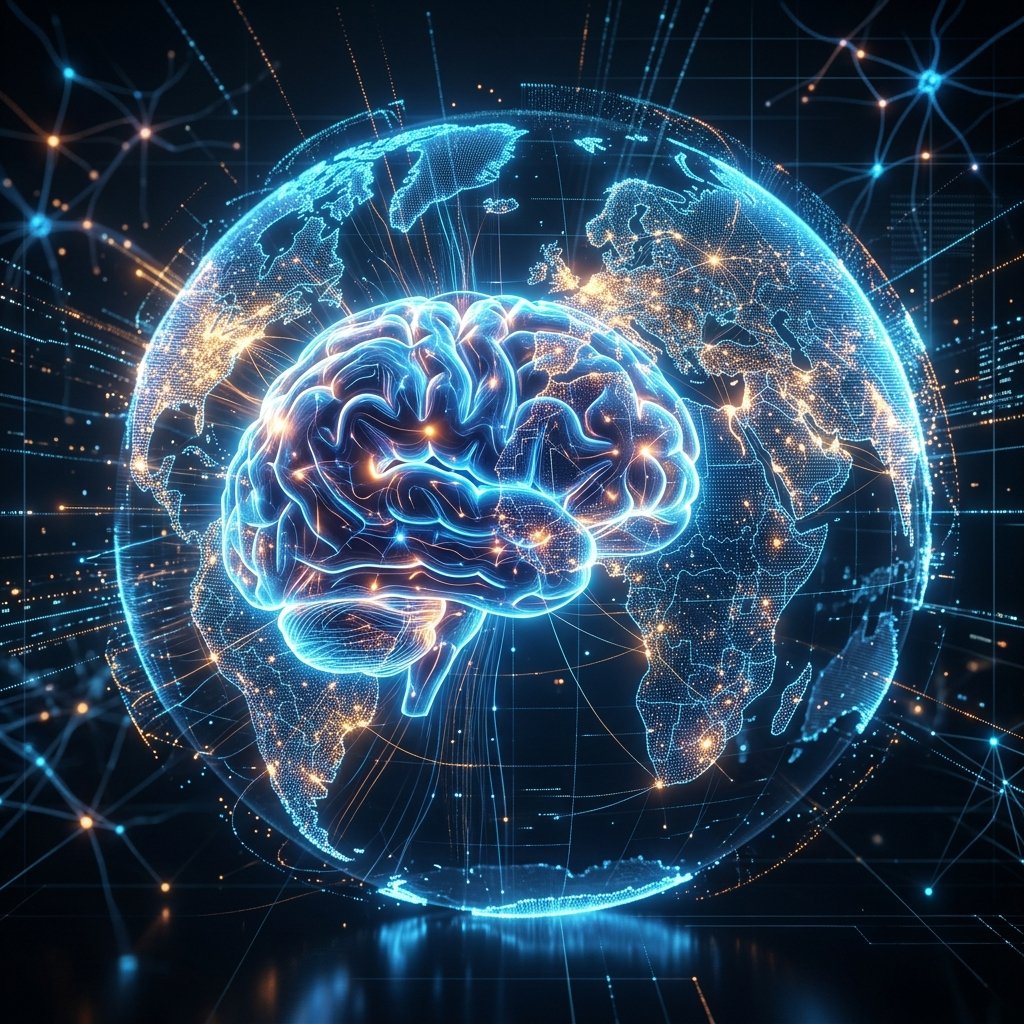
This intense multitasking stimulates the hippocampus, the region of the brain heavily associated with spatial memory and navigation. Famously, neurological studies conducted on London taxi drivers—who must memorize the city's labyrinthine layout, a feat known as "The Knowledge"—revealed that their hippocampi were physically larger than those of average citizens. While playing a browser game won't necessarily turn you into a master navigator of London, it consistently exercises this crucial brain region, promoting neuroplasticity—the brain's ability to form and reorganize synaptic connections, especially in response to learning or experience.
2. Active Recall vs. Passive Memorization
One of the most robust findings in cognitive psychology is the "testing effect," which demonstrates that long-term memory is increased when some of the learning period is devoted to retrieving the to-be-remembered information. This process is known as active recall.
Traditional education often relies on passive memorization—staring at a map and trying to burn the shapes of countries into your mind. Geography games turn this model upside down. By dropping you into an unknown location, the game forces you to actively retrieve information. You might see a specific type of electrical pole and think, "Where have I seen that before? Right, that looks like the infrastructure in Brazil."
Every time you successfully recall that information to solve a geographical puzzle, you strengthen the neural pathway associated with that memory. It transforms fragile, short-term observations into cemented, long-term knowledge. Over time, you aren't just memorizing facts; you are building a vast, interconnected mental web of geographical, cultural, and infrastructural data.
Contextual Learning at Its Finest
Games provide a crucial framework for facts. Instead of learning that Colombia has diverse biomes from a bulleted list, you actually experience it virtually by being dropped in the lush Andes mountains one round and the arid Guajira Peninsula the next. This contextual anchor makes the information exponentially easier for the human brain to store and retrieve.
3. Developing Advanced Spatial Reasoning Skills
Spatial reasoning is the capacity to think about objects in three dimensions and to draw conclusions about those objects from limited information. It is a critical skill not just for geography, but for fields ranging from mathematics and engineering to everyday tasks like packing the trunk of a car.
Navigation-based guessing games are perhaps the ultimate test of spatial reasoning on the internet. Players must observe a 3D panorama, determine compass directions using the sun's position, analyze the topography of the land, and then translate all of that 3D spatial data onto a flat, 2D global map.
When you try to align a winding coastal road you see on your screen with a jagged coastline on the mini-map, you are performing a highly complex cognitive translation. Regular engagement with these mechanics sharpens your spatial awareness, making you better at visualizing distances, orientations, and geographic relationships in the real world.
4. Contextual Learning and High-Level Pattern Recognition
In the geography gaming community, there is a concept known as "the meta." Whether you are identifying world flags or examining rural roads, the meta refers to the underlying patterns and clues that give away a location, which often have nothing to do with traditional geography. This includes recognizing the color of the Google Street View car, identifying the type of camera generation used, or spotting unique bollards and license plate shapes.
While some critics might argue that learning "the meta" isn't real geography, cognitive scientists disagree. Learning these incredibly nuanced details requires profound pattern recognition skills. Your brain must learn to categorize massive amounts of visual data efficiently. You begin to recognize that yellow license plates on the front and back of a car strongly suggest the UK or the Netherlands, while the combination of a white front plate and yellow back plate points to France.
This ability to quickly identify anomalies, categorize visual data, and apply deductive reasoning is a highly transferable cognitive skill that benefits executive function and logical problem-solving in all areas of life.
5. Fostering Global Citizenship and Empathy
Beyond raw cognitive enhancement, geography games offer profound social and emotional benefits. Textbooks and news media often portray foreign countries through a very narrow, filtered lens, focusing largely on geopolitical conflicts or major tourist landmarks.
World Guesser strips away this filter. By placing you on a random suburban street in Argentina, a quiet dirt road in Cambodia, or a snowy highway in Finland, it exposes you to the everyday reality of global life. You see homes, local businesses, commuters, and school children.
This unfiltered exposure fosters a powerful sense of global citizenship and empathy. It humanizes regions of the world that might otherwise remain abstract concepts on a map. By exploring diverse cultures and environments digitally, players develop a more compassionate, informed perspective, breaking down stereotypes and building a deeper appreciation for the interconnectedness of our modern world.
6. Practical Applications for Teachers and Parents
Getting students genuinely excited about geography is a historic challenge for educators. Memorizing states, capitals, and mountain ranges via flashcards is notoriously tedious. However, gamifying the experience completely changes the educational dynamic.
For Educators: Teachers are increasingly using games like World Guesser as classroom warm-ups or reward activities. By projecting a location onto a smartboard, educators can facilitate collaborative problem-solving. Students must debate the clues—discussing climate zones, language families, and architectural history—to reach a consensus. This transforms passive learning into an interactive, team-building exercise that hits multiple educational standards simultaneously.
For Parents: In an era where screen time is a constant battle, geography games offer a guilt-free solution. They provide what child psychologists call "productive screen time." When children play these games, they are silently absorbing lessons about world cultures, language differentiation, and spatial mapping while they think they are simply playing a competitive game. It is stealth education at its finest.
7. Fighting Cognitive Decline in Adulthood
The cognitive benefits of playing geography games are not limited to children and students. For older adults, keeping the mind active is universally recommended by neurologists to stave off cognitive decline and conditions like dementia.
While crosswords and Sudoku have long been the gold standard for brain training, geography games offer a dynamic, visually stimulating alternative that engages completely different neural pathways. The requirement to observe intricate visual details, formulate hypotheses under time pressure, and recall long-forgotten geographical trivia provides a robust, holistic mental workout that keeps the brain's synapses firing efficiently.
Ready to Give Your Brain a Workout?
The evidence is clear: the next time you spend an hour exploring the globe on World Guesser, you should never view it as time wasted. You are actively improving your memory, expanding your worldview, honing your deductive reasoning, and building stronger cognitive resilience.