How Many Countries Are in the World in 2026? (The Real Answer)
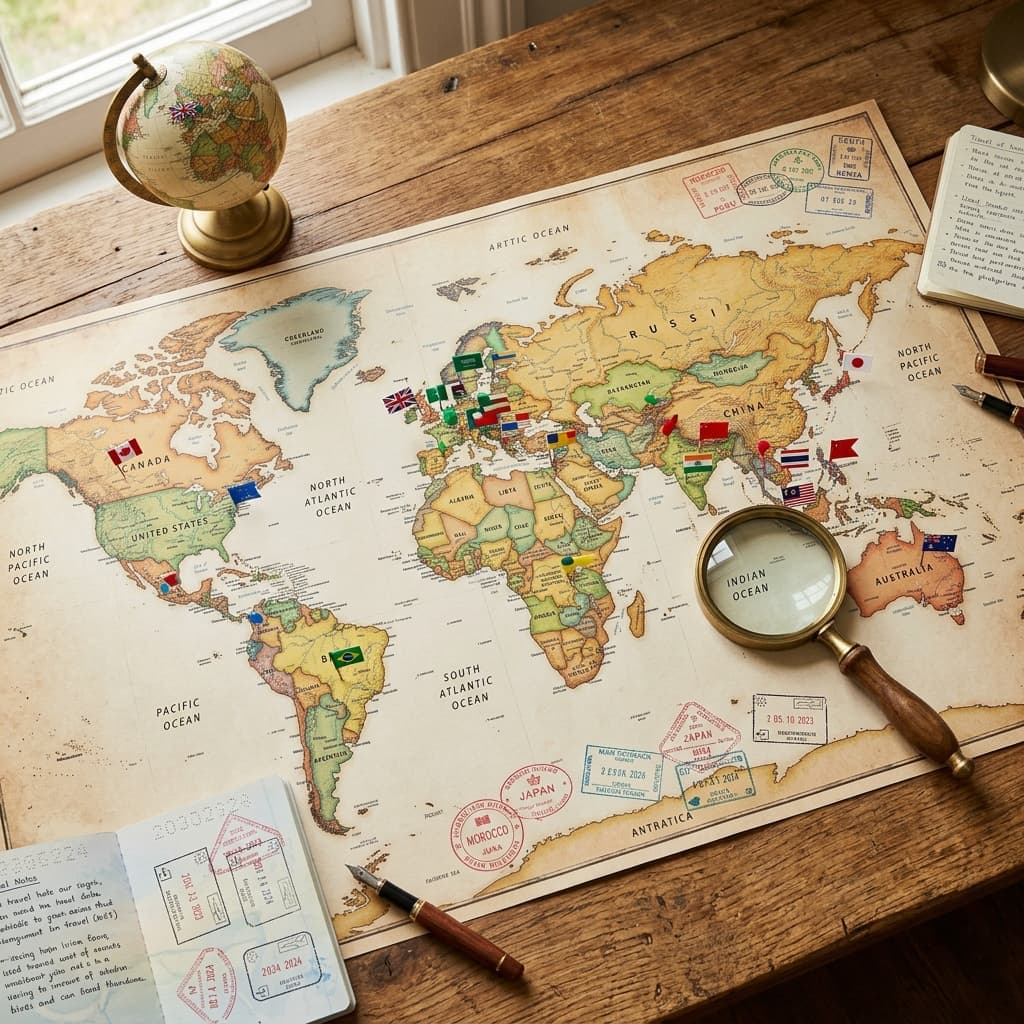
There are 195 countries in the world in 2026. This number includes 193 member states of the United Nations plus 2 observer states — Vatican City and Palestine.
However, that answer only tells part of the story. Depending on who you ask, the total number of countries ranges from 193 to 249. The United Nations says 193. The Olympics says 206. FIFA says 211. And the ISO country code list goes all the way up to 249.
So which number is correct? All of them — and none of them. Each organization uses different rules to decide what counts as a "country." In this guide, we break down every count, explain why they differ, and share the accurate data behind each number.
At World Guesser, our team has spent years building geography games, designing flag quizzes, and creating daily geography challenges played by millions. We study maps, borders, and country data every day. That experience is the foundation of this guide.
The Quick Answer: 195 Countries
The most widely accepted number is 195 countries. This is the figure used by governments, schools, news outlets, and most educational websites around the world.
193 countries are full member states of the United Nations.
2 countries are non-member observer states: the Holy See (Vatican City) and the State of Palestine.
Together, that gives us 195. If someone asks you "how many countries are in the world?" on a quiz or school test, 195 is the safest answer.
But this number does not include places like Taiwan or Kosovo. Both of them function as independent countries. They have their own governments, economies, and borders. Yet they are not UN members. That is where things get complicated.
But wait — why do some sources say 193 instead of 195?
Some sources only count the 193 full UN member states. They leave out Vatican City and Palestine because those two hold "observer" status, not full membership.
Observer states can attend United Nations meetings and join in debates. However, they cannot vote on resolutions. Because of this technicality, some lists only count 193.
In practice, both Vatican City and Palestine are recognized as countries by the vast majority of the world. So 195 is a more complete and honest answer than 193.
What Actually Makes a Country a Country?
Before we dig deeper into the numbers, it helps to understand what a "country" actually is. This question sounds simple. It is not.
The most widely accepted legal definition comes from the Montevideo Convention of 1933. This international treaty set out four requirements for statehood:
- A permanent population — people must live there.
- A defined territory — it must have clear borders.
- A government — someone must be in charge.
- The capacity to enter into relations with other states — it must be able to deal with other countries diplomatically.
If a territory meets all four conditions, it qualifies as a state under international law. These criteria are still used by the UN today when evaluating new membership applications.
Here is the tricky part: a place can meet all four criteria and still not be recognized as a country. Taiwan is the perfect example. It has 23 million people, a defined territory, a democratic government, and diplomatic relations with about a dozen countries. It even has the 21st largest economy in the world. Yet the UN does not recognize it as a member state.
Why? Because China claims Taiwan as part of its territory. And since China holds a permanent seat on the UN Security Council with veto power, it can block Taiwan from joining. So the definition of a "country" is partly legal, partly political — and partly just about who has the power to say yes or no.
Is England a country? It has its own football team but no UN seat.
This is one of the most common geography questions online. The answer is: it depends on context.
England is a country within the United Kingdom. It has its own identity, flag, and football association. However, it is not a sovereign state. It does not have its own seat at the UN, its own passport, or its own foreign policy.
The United Kingdom — which includes England, Scotland, Wales, and Northern Ireland — is the sovereign state that holds the UN seat. So on a list of 195 countries, you will see "United Kingdom," not "England."
Interestingly, all four UK home nations have their own FIFA teams. That is one reason why FIFA has 211 members while the UN only has 193.
Why Different Organizations Count Different Numbers
One of the most confusing things about this topic is that almost every major international organization gives a different count. Here is a clear breakdown:
| Organization | Count | What It Includes |
|---|---|---|
| United Nations (members only) | 193 | Sovereign member states |
| United Nations (+ observers) | 195 | + Vatican City + Palestine |
| US State Department | 197 | + Taiwan + Kosovo |
| International Olympic Committee | 206 | + dependent territories + partially recognized states |
| FIFA | 211 | + UK home nations + 18 dependent territories |
| CIA World Factbook | 237 | Includes many territories as separate entries |
| ISO 3166 country codes | 249 | Every territory, dependency, and special designation |
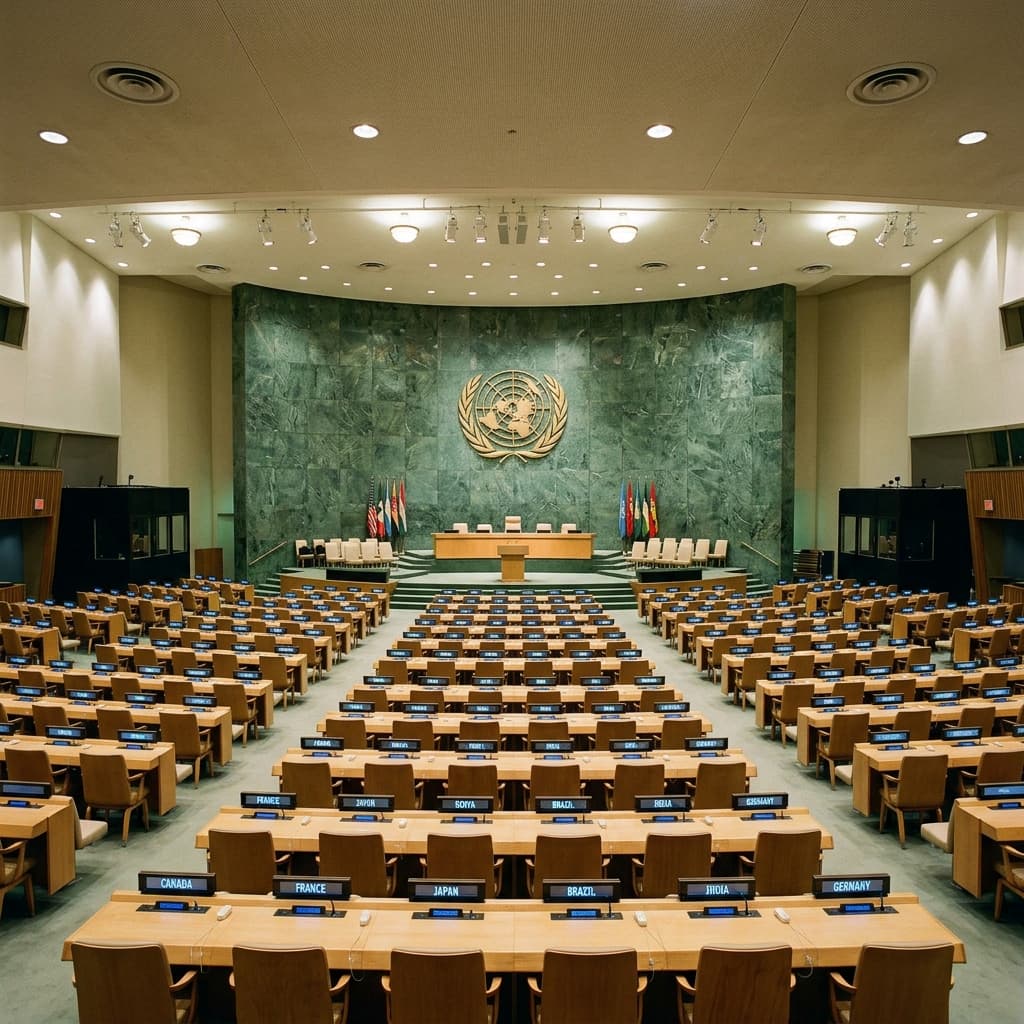
Each organization has a different purpose, so each uses different rules. The United Nations is a political body, so it only counts states that pass its membership process. FIFA wants as many football teams as possible, so it accepts territories like Puerto Rico, Guam, and Hong Kong. The ISO needs a code for every place that issues mail or has an internet domain, so its list is the longest.
None of these organizations is wrong. They are just answering different questions.
How can FIFA have 211 members when there are only 195 countries?
FIFA allows territories and historic football associations to join, not just sovereign countries. For example, England, Scotland, Wales, and Northern Ireland each have their own FIFA team — even though all four are part of the United Kingdom. That alone adds 3 extra entries compared to a UN-style count.
On top of that, FIFA includes places like Puerto Rico, Bermuda, Hong Kong, and the Faroe Islands. These are not independent countries. They are dependent territories governed by other nations. But because they have their own football associations, they compete separately in FIFA events. In total, FIFA has 26 members that are not UN member states.
Why does the Olympics have more "countries" than any world map shows?
The International Olympic Committee recognizes 206 National Olympic Committees. If you have ever watched an Olympic opening ceremony and thought "wait, there are way more teams walking in than I expected," this is why.
The IOC includes 193 UN member states, 1 observer state (Palestine), 2 partially recognized states (Kosovo and Chinese Taipei/Taiwan), and 10 dependent territories such as Puerto Rico, Guam, and the US Virgin Islands.
So the 206 number is not a count of "countries" in the traditional sense. It is a count of recognized Olympic teams — some of which represent territories, not sovereign states.
The 193 UN Member States Explained
The United Nations official member states listis the closest thing the world has to an official roster of countries. Its 193 member states form the backbone of every "how many countries" answer.
The UN was founded on October 24, 1945, with just 51 original member states. Since then, the roster has nearly quadrupled. New countries joined as colonial empires dissolved, nations gained independence, and existing countries split apart.
Timeline of Major UN Milestones:
- 1945: UN founded with 51 original members.
- 1955–1965: Decolonization wave. Dozens of African and Asian nations gained independence and joined.
- 1991–1993: Soviet Union collapsed (added 15 new countries). Yugoslavia began breaking apart. Czechoslovakia split peacefully.
- 2002: East Timor (Timor-Leste) joined after gaining independence from Indonesia.
- 2006: Montenegro joined after separating from Serbia.
- 2011: South Sudan became the 193rd and most recent member.
To become a UN member, a state must be recommended by the Security Council — where no permanent member (the US, UK, France, Russia, or China) uses its veto. After that, a two-thirds majority of the General Assembly must approve.
Do the UN Security Council veto powers affect how many countries exist?
Yes, significantly. The five permanent members of the Security Council — the United States, United Kingdom, France, Russia, and China — each have the power to veto any new membership application.
This is exactly why Taiwan is not a UN member. China vetoes any attempt by Taiwan to join. Similarly, Russia blocks Kosovo's membership because Russia supports Serbia's claim over the territory.
So the number 193 is not purely a geographic or legal count. It is also a political one. Some places that function as independent countries are kept out of the UN because of geopolitical rivalries.
The 2 UN Observer States
Two entities hold permanent observer status at the UN: Vatican City (the Holy See) and the State of Palestine.
🇻🇦 Vatican City
Smallest country in the world by area and population (0.44 km², ~800 residents inside Rome). Spiritual and administrative center of the Catholic Church led by the Pope. Vatican City chose observer status voluntarily and has never applied for full UN membership.
🇵🇸 State of Palestine
Gained observer state status in 2012 through a General Assembly vote. Recognized as a state by over 140 UN member countries. Its path to full membership has been blocked by vetoes in the Security Council.
What is the real difference between 193 and 195 countries?
Simply put, 193 counts only full UN members with voting rights. The number 195 adds the two observer states that are widely recognized as countries but have chosen — or been prevented from getting — full membership.
For most purposes, 195 is the more useful number because it reflects reality more accurately.
Disputed Countries the UN Does Not Count
Several territories around the world function as independent countries. They have their own governments, borders, currencies, and sometimes even militaries. Yet they are not UN members and are not included in the 195 count.
Taiwan (Republic of China)
Population of ~23 million, 21st largest economy globally, fully democratic government. China considers Taiwan a breakaway province and uses its UN veto to block membership.
Kosovo
Declared independence from Serbia in 2008. Recognized by over 100 UN members including the US and EU states. Uses Euro, competes in Olympics, but blocked by Serbia, Russia, and China.
Western Sahara (Sahrawi Arab Democratic Republic)
Claimed by Morocco but recognized by the African Union and roughly 40 UN member states.
Somaliland
Declared independence from Somalia in 1991. Self-governing for over 30 years with its own currency, police force, military, and elections. Formally recognized by zero UN member states.
Other partially recognized or disputed territories include Northern Cyprus (recognized only by Turkey), Transnistria (a breakaway region of Moldova), and Abkhazia and South Ossetia (breakaway regions of Georgia recognized by Russia and a few other states).
Why isn't Taiwan in the UN if it has its own government, military, and economy?
Taiwan meets every criterion for statehood under the Montevideo Convention. It has a permanent population, defined territory, a functioning democratic government, and the capacity to enter into foreign relations.
The only thing preventing Taiwan's UN membership is politics. China considers Taiwan part of its territory and uses its Security Council veto power to block any membership application. Most countries follow a "One China" policy — officially recognizing China while maintaining informal ties with Taiwan.
Why doesn't anyone recognize Somaliland when it has been functioning independently for over 30 years?
Somaliland has been self-governing since 1991 — longer than many fully recognized countries. The main reason for non-recognition is the African Union's policy against changing colonial-era borders.
African leaders worry that recognizing Somaliland could trigger a wave of secessionist movements across the continent. So Somaliland continues to function as a country in practice while being treated as part of Somalia on paper.
How Many Countries Are on Each Continent?
The world's 195 countries are spread unevenly across six inhabited continents. Here is the breakdown:
| Continent | Number of Countries | Most Populous Country | Largest Country (by area) |
|---|---|---|---|
| Africa | 54 | Nigeria | Algeria |
| Europe | 51 | Russia (European part) | Ukraine (entirely in Europe) |
| Asia | 49 | India | China |
| North America | 23 | United States | Canada |
| Oceania | 14 | Australia | Australia |
| South America | 12 | Brazil | Brazil |
| Antarctica | 0 | — | — |
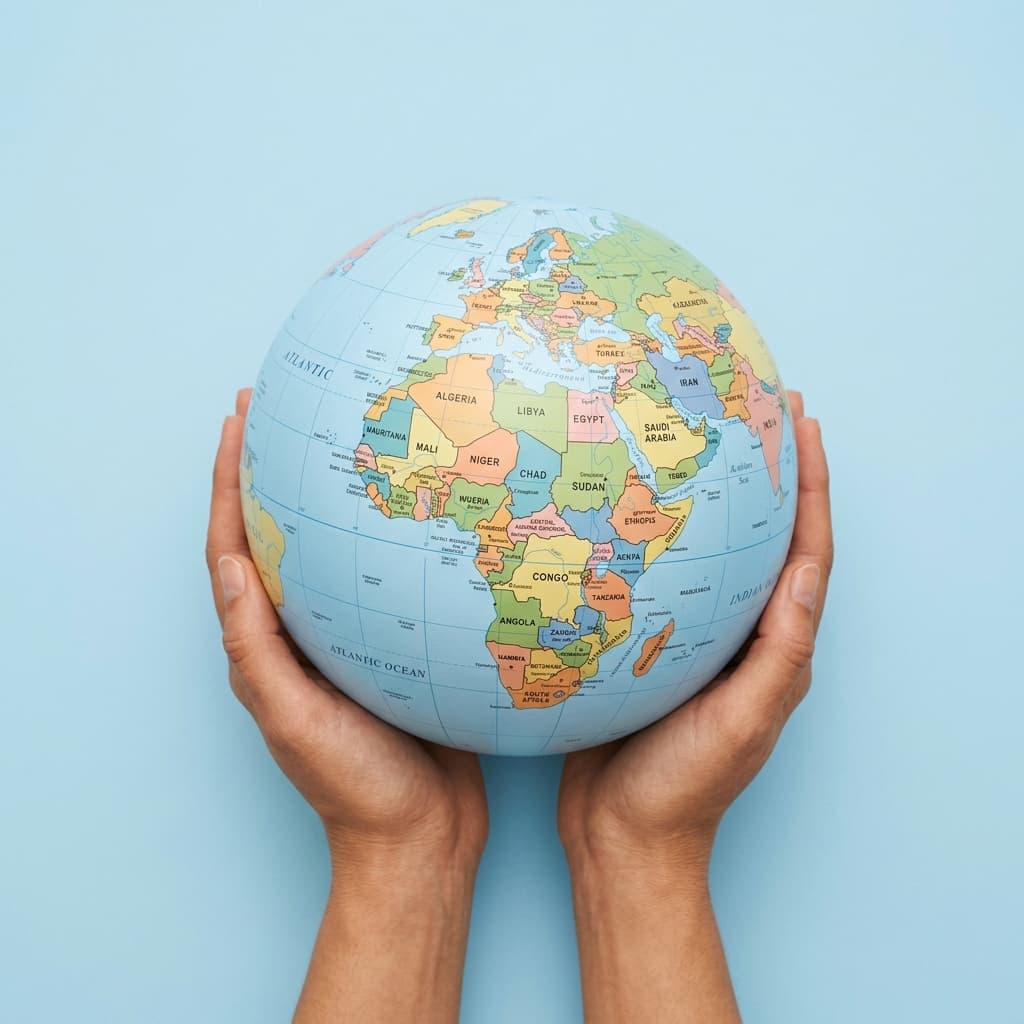
Africa has the most countries of any continent with 54. That number is largely a result of decolonization in the mid-20th century.
South America has the fewestwith just 12 countries, dominated by Brazil which takes up nearly half the continent's land area.
Antarctica has no countries. Seven nations maintain territorial claims, but the Antarctic Treaty System of 1959 suspends all claims.
If you want to test how well you know countries by continent, try our geography guessing game — it covers locations from all six inhabited continents.
What Is the Newest Country in the World?
The newest internationally recognized country is South Sudan, which declared independence on July 9, 2011.
South Sudan split from Sudan after a referendum in which 98.83% of voters chose separation. It became the 193rd member of the United Nations just days later.
Before South Sudan, the previous newest countries were Montenegro and Serbia (both 2006) and East Timor (2002).
Could Bougainville become country number 194 by 2027?
Possibly. Bougainville is an autonomous region of Papua New Guinea. In a 2019 referendum, 97.7% of voters chose independence.
Bougainville's leaders and Papua New Guinea's government agreed on a timeline target for self-government by September 2027 and full independence by 2030. If ratified and recognized, it would become the world's 194th UN member state.
Countries That No Longer Exist
Throughout history, countries have merged, dissolved, been conquered, and disappeared from the map entirely. Major examples since 1990:
Soviet Union (1922–1991)
Dissolved into 15 independent countries including Russia, Ukraine, Kazakhstan, and Belarus.
Yugoslavia (1918–1992)
Broke apart into 7 successor states: Slovenia, Croatia, Bosnia, Serbia, Montenegro, North Macedonia, and Kosovo.
Czechoslovakia (1918–1993)
Split peacefully in the "Velvet Divorce" into Czechia and Slovakia.
East Germany (1949–1990)
Reunified with West Germany following the fall of the Berlin Wall.
Could the number of countries actually go down in the future?
In 1945, the UN had 51 members. Today it has 193. The number of sovereign states has roughly quadrupled in less than 80 years. While the pace has slowed, it is far more likely that the number of countries will go up in the coming decades than down.
What About Micronations?
Micronations are self-declared "countries" that claim sovereignty but have zero international recognition. Famous examples include Sealand (WWII platform off England), Liberland (Danube riverbank), and the Republic of Molossia.
Are micronations like Sealand actually countries, or just people playing pretend?
Legally, they are not countries. None meet the four criteria of the Montevideo Convention, and none are recognized by any UN member state. Without diplomatic recognition, a micronation is essentially a very committed hobby project.
If you enjoy thinking about borders and territories, test your skills in our daily geography challenge.
Smallest and Largest Countries in the World
By Area
| Rank | Country | Area | Fun Comparison |
|---|---|---|---|
| Largest | Russia | 17,098,242 km² | Spans 11 time zones |
| 2nd | Canada | 9,984,670 km² | Second largest, but only ~40M people |
| 3rd | China | 9,596,961 km² | Nearly the same size as the US |
| Smallest | Vatican City | 0.44 km² | Smaller than most golf courses |
| 2nd smallest | Monaco | 2.02 km² | Walk across it in under an hour |
By Population (2026 estimates)
- 1st: India (~1.45 billion)
- 2nd: China (~1.42 billion)
- 3rd: United States (~340 million)
- Least: Vatican City (~800 people)
Geography Records Worth Knowing
- Most languages spoken: Papua New Guinea (800+ languages).
- Most time zones: France (12 time zones, including overseas territories).
- Most border-sharing countries: China & Russia (14 neighboring countries each).
- Most densely populated: Monaco (26,000+ people/km²).
- Least densely populated: Mongolia (~2 people/km²).
If you want to put your geography knowledge to the test, our World Guesser game covers locations from over 180 countries.
The World in Numbers: A 2026 Snapshot
What Is the Difference Between a Country, a Nation, a State, and a Territory?
Country: Everyday term referring to a sovereign state with its own government and borders.
State: Formal legal term for an entity that meets Montevideo criteria.
Nation: A group of people sharing a common identity (language, culture, history) without necessarily having a sovereign state (e.g. Kurds).
Territory: A region governed by another country rather than operating independently (e.g. Puerto Rico, Greenland).
Test Your Geography Knowledge
Now you know the numbers behind the world's countries. Put your visual knowledge to the test with our free games and guides:
Play Classic Mode
5 rounds of location guessing
Flag Guesser
Test all 195 country flags
Daily Challenge
Fresh challenge every day
Capital Cities Quiz
Master all 193 capitals
Check out our related guides:
Frequently Asked Questions
How many countries are in the world in 2026?
There are 195 countries in the world in 2026. This includes 193 United Nations member states and 2 non-member observer states (Vatican City and Palestine). Some sources count 197 by adding Taiwan and Kosovo.
What is the newest country in the world?
South Sudan is the newest internationally recognized country. It declared independence from Sudan on July 9, 2011, after a referendum in which 98.83% of voters chose separation.
Why do some sources say 193 countries and others say 195?
The number 193 counts only full UN member states with voting rights. The number 195 adds the two permanent observer states — Vatican City and Palestine.
Is Taiwan a country?
Taiwan functions as an independent country in every practical sense with its own government, military, and currency. However, it is not a UN member state because China claims it and uses its Security Council veto.
What is the smallest country in the world?
Vatican City is the smallest country in the world by both area (0.44 km²) and population (~800 people). The second smallest is Monaco (2.02 km²).
What is the largest country in the world?
Russia is the largest country in the world by area, spanning 17,098,242 square kilometers across 11 time zones.
Could a new country be created soon?
Bougainville is the strongest candidate. In 2019, 97.7% of voters chose independence in a referendum, with a target timeline for independence by 2030.