Why So Many Countries Have Red, White, and Blue Flags
Introduction
Take a quick look at a map of the world or the flags flying outside the United Nations headquarters in New York City. You will immediately notice a striking pattern that spans across every single continent. A massive number of countries—including the United States, France, the United Kingdom, Russia, the Netherlands, Australia, and countless others—share the exact same core color palette on their national flags: red, white, and blue.
In fact, out of the 193 recognized member states of the United Nations, a significant plurality utilize this specific tricolor combination in varying arrangements. Is this just a massive global coincidence? Did early flag designers simply lack imagination? Absolutely not.
The undeniable prevalence of these three colors is the result of a fascinating combination of deep historical influence, the practical manufacturing constraints of the past, the rise of modern democratic movements, and a powerful shared symbolism that transcends linguistic and cultural barriers.
Whether you are a competitive geography trivia buff, an aspiring vexillologist (a person who studies flags), or a player looking to improve your deductive skills on World Guesser, understanding the rich history behind these colors will fundamentally change the way you look at the world map. Let us dive deep into the true meaning, history, and science behind the red, white, and blue.
Historical Influence and the Rise of the Tricolor
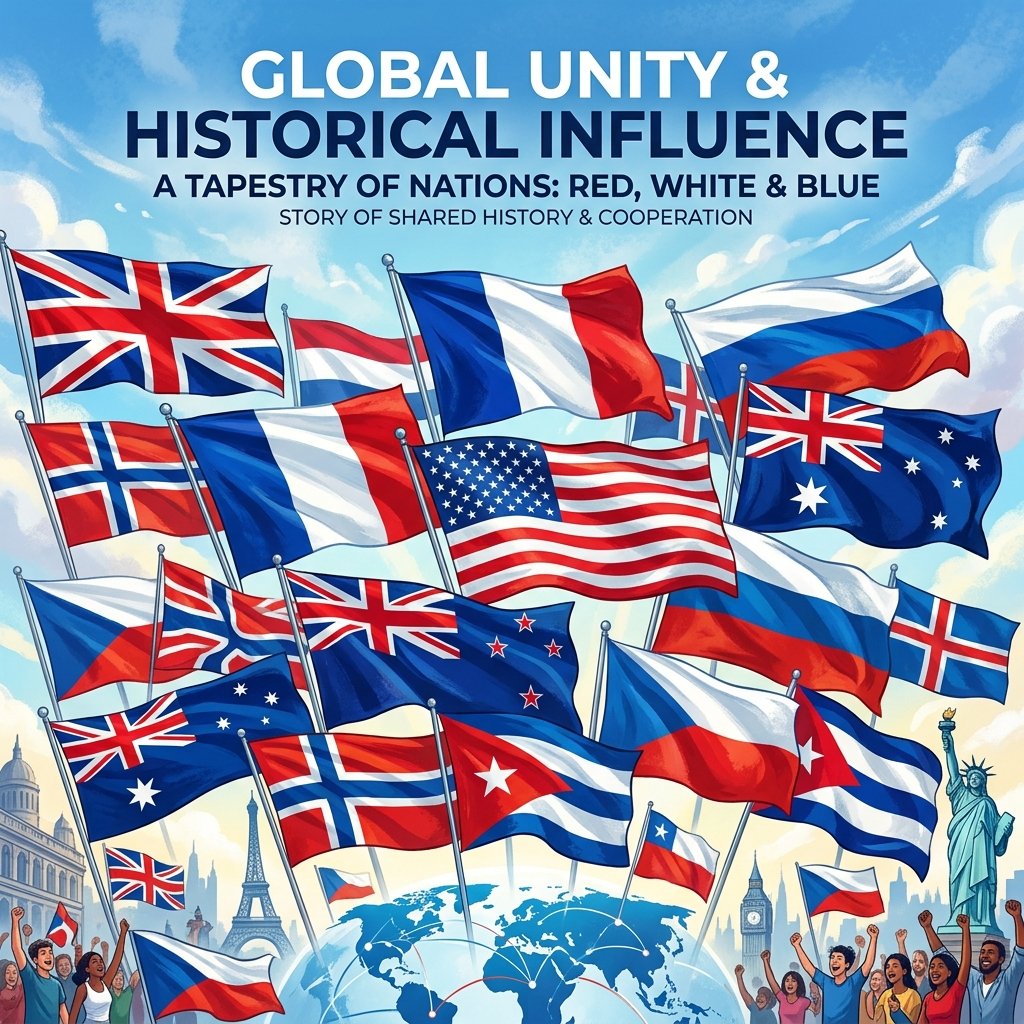
The primary reason so many national flags share these specific colors is rooted in historical imitation and the desire to align with powerful, established countries. Throughout history, newly formed nations, revolutionary movements, and newly independent states often looked to dominant global powers for inspiration when designing their own national symbols.
The Dutch flag, consisting of red, white, and blue horizontal stripes, is widely considered one of the earliest and most influential tricolors in modern world history. Originating during the Dutch revolt against Spanish rule in the late 16th century (originally as orange, white, and blue before the orange was darkened to red for visibility at sea), its simple yet striking design directly inspired the flags of numerous other nations across the globe.
Similarly, the French Revolution of 1789 popularized the French tricolore. This flag—which combined the red and blue colors of Paris with the white of the Bourbon monarchy—became a potent, globally recognized symbol of liberty, equality, and republicanism. It stood in stark, defiant contrast to the complex, coat-of-arms-heavy banners of the autocratic monarchies of the era. Many countries seeking to signal their own transition to democratic values and republican governance adopted similar tricolor designs, cementing the red, white, and blue as the de facto colors of modern freedom.
The Pan-Slavic Color Movement
One of the most significant reasons for the density of red, white, and blue flags in Eastern Europe is the Pan-Slavic movement. The story begins with Peter the Great of Russia. In the late 17th century, Peter the Great traveled to the Netherlands to study shipbuilding and naval architecture, aiming to build a Western-oriented Russian navy.
Impressed by the Dutch naval prowess and their striking tricolor flag, he adopted a remarkably similar design for the Russian merchant flag: horizontal stripes of white, blue, and red. Over the centuries, this flag became synonymous with the Russian Empire and the Slavic people.
During the 19th century, as various Slavic nations in Eastern Europe and the Balkans began fighting for their independence from the Austro-Hungarian and Ottoman Empires, they adopted the Russian colors to symbolize their shared ethnic heritage and mutual solidarity. In 1848, the Prague Slavic Congress officially adopted red, blue, and white as the Pan-Slavic colors. Today, you can see the direct result of this historical decision in the flags of Serbia, Croatia, Slovakia, Slovenia, and the Czech Republic, all of which proudly display variations of the Pan-Slavic palette.
The Impact of the American Revolution
Across the Atlantic, the creation of the United States flag—the Stars and Stripes—had a profound ripple effect on flag design in the Western Hemisphere. The American colonists inherited their colors from the British Union Jack, but their successful revolution transformed those colors into a symbol of anti-colonial independence.
As nations in Latin America and the Caribbean fought for their own independence throughout the 19th century, many looked to the United States as a successful model of a post-colonial republic. The flag of Liberia, a nation founded by freed American slaves, heavily mirrors the US flag with its red and white stripes and a single white star on a blue canton.
The flags of Cuba and Puerto Rico also utilize the red, white, and blue in striking geometric patterns of stripes and triangles, directly inspired by the ideals of the American and French revolutions. Chile's flag, known as "La Estrella Solitaria" (The Lone Star), also adopted the red, white, and blue motif to represent their newly won independence from Spain.
The Practicality of Maritime Navigation
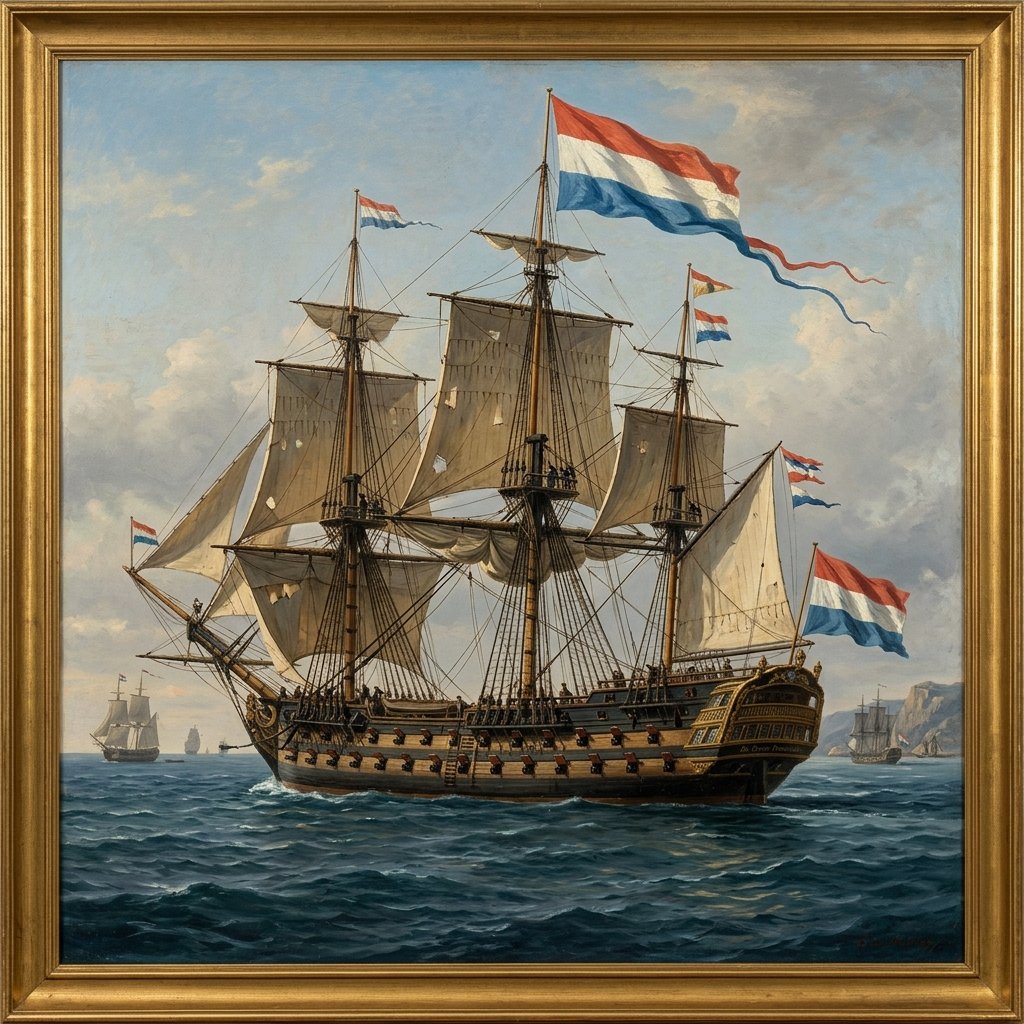
While politics and ideology drove the adoption of these colors on land, the harsh realities of the ocean drove their adoption at sea. Before the invention of modern synthetic chemical dyes in the mid-19th century, creating vibrant, long-lasting colors on large swaths of fabric was an incredibly difficult and expensive manufacturing process.
Red, white (undyed fabric), and blue (frequently derived from indigo) were among the most accessible, affordable, and practical colors to produce using natural dyes available at the time. More importantly, national flags originally served a very functional, life-or-death purpose: maritime communication and naval identification.
Ships at sea needed to visually identify each other from vast distances, often struggling through thick fog, torrential rain, or the blinding cannon smoke of naval warfare. Red, white, and blue are bold, highly contrasting colors that remain visible and distinct from one another even in extremely poor weather conditions. Furthermore, these specific natural pigments tended to be far more durable and resistant to fading caused by harsh, salty sea spray and intense oceanic sunlight compared to other natural dyes like purple or green.
Vexillology and the Rule of Tincture
There is also a scientific and design-focused reason for the popularity of this color triad, rooted in the ancient European rules of heraldry (the design of coats of arms). One of the most fundamental rules of heraldic design is the Rule of Tincture.
This rule states that a "color" (darker shades like red, blue, green, or black) should never be placed directly next to another "color." Instead, they must be separated by a "metal" (lighter shades like white/silver or yellow/gold) to maximize visual contrast and legibility from a distance.
The combination of red, white, and blue perfectly adheres to this ancient design principle. By placing bright white between the darker red and blue, flag designers ensure that the flag pops visually and can be easily deciphered whether it is drooping on a windless day or flapping violently in a storm.
The Shared Symbolism of the Colors
While the exact, legally defined meaning of the colors can vary slightly from country to country, red, white, and blue have come to represent a fairly universal set of core human ideals and patriotic values across the globe.
Red: Valor and Sacrifice
Across almost all cultures and continents, red is a potent symbol of hardiness, raw courage, and valor. It almost universally represents the blood shed by patriots, revolutionaries, and soldiers in the struggle for national independence and the ongoing defense of the nation's borders and ideals.
White: Peace and Purity
White is the globally recognized color of peace and surrender. On national flags, however, it more often signifies purity of intention, national innocence, honesty, and the collective desire for a harmonious, peaceful existence within the nation's newly established borders.
Blue: Justice and Vigilance
Blue frequently represents lofty societal concepts like vigilance, perseverance, truth, and unwavering justice. In many geographic and island contexts, the color blue is also utilized quite literally to represent the vast sky above or the surrounding oceans and rivers that define the nation's geography.
Put Your Geography Knowledge to the Test
The next time you see a red, white, and blue flag waving in the breeze, you will know that it is not just a random design choice thrown together by an uninspired artist. It is a profound reflection of centuries of maritime history, the global spread of democratic ideals, the legacy of the Pan-Slavic movement, and a deeply shared human language of visual symbolism.