The 10 Hardest Countries to Differentiate
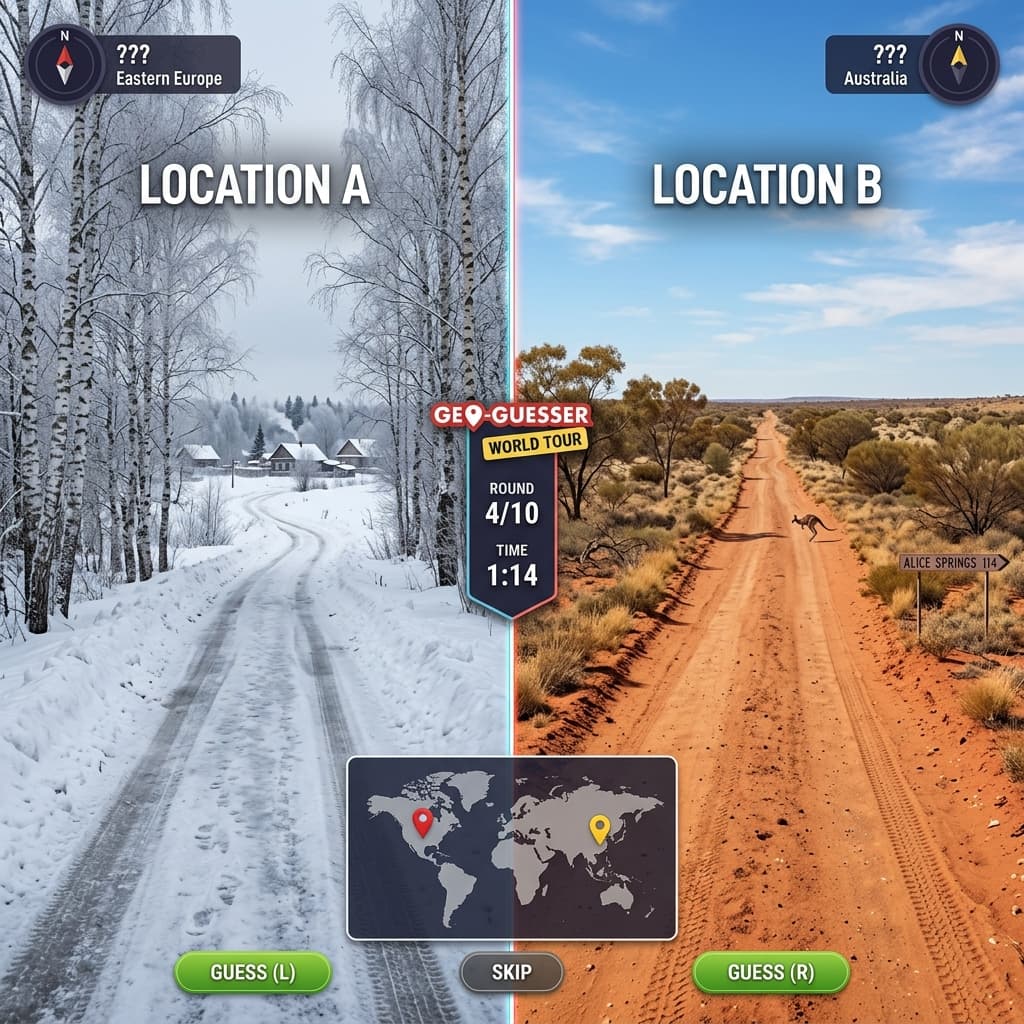
Have you ever lost a perfect streak because you guessed Australia instead of South Africa? Or stared at a snowy road trying to decide between Russia and Ukraine? You're not alone.
In competitive location guessing games like World Guesser, raw geography knowledge is only half the battle. To consistently rank high on the global leaderboards, players must master the subtle "metas"—hidden clues embedded in Google Street View coverage, infrastructure nuances, and language patterns.
The Golden Rule
Before over-analyzing a single tree or road line, always check the Sun and Compass. If the sun is in the north, you are in the Southern Hemisphere. If the sun is in the south, you are in the Northern Hemisphere. This instantly cuts your options in half!
1. Russia vs. Ukraine
The Eastern European Enigma
Both countries share vast, flat plains, endless forests of birch trees, and similar post-Soviet architecture.
They both use the Cyrillic alphabet, meaning for a beginner, a rural dirt road in Russia is entirely indistinguishable from one in Ukraine.
The Cheat Codes
- ✓The "i" Meta: The Ukrainian alphabet uses the letters "і" and "ї". These do not exist in Russian (which uses "и"). If you see a dotted "i", it's Ukraine.
- ✓The Red Car Meta: A significant portion of Ukrainian Street View was captured using a red Google car. If you see a red hood, Ukraine is highly probable.
- ✓License Plates: Ukrainian license plates feature a distinct blue and yellow vertical strip on the left side, representing the national flag.
2. Australia vs. South Africa vs. New Zealand
The Southern Hemisphere Mix-Up
These countries all drive on the left side of the road, feature vast arid outback or sprawling bushlands, and utilize similar English-language road signage.
This shared heritage and climate make them notoriously difficult for newcomers to tell apart at a glance.
The Cheat Codes
- ✓Road Paint: South Africa almost exclusively uses yellow outer lines. Australia and New Zealand predominantly use white outer edge lines.
- ✓Camera Quality: Australia features crisp, highly saturated "Gen 4" images. South African rural roads are heavily documented in older "Gen 2" coverage with a "halo" effect in the sky.
- ✓Bollards: Australian delineators have a red rectangle reflector on the back, while New Zealand bollards have a red band wrapping around a white post.
3. Sweden vs. Finland vs. Norway
The Nordic Nuances
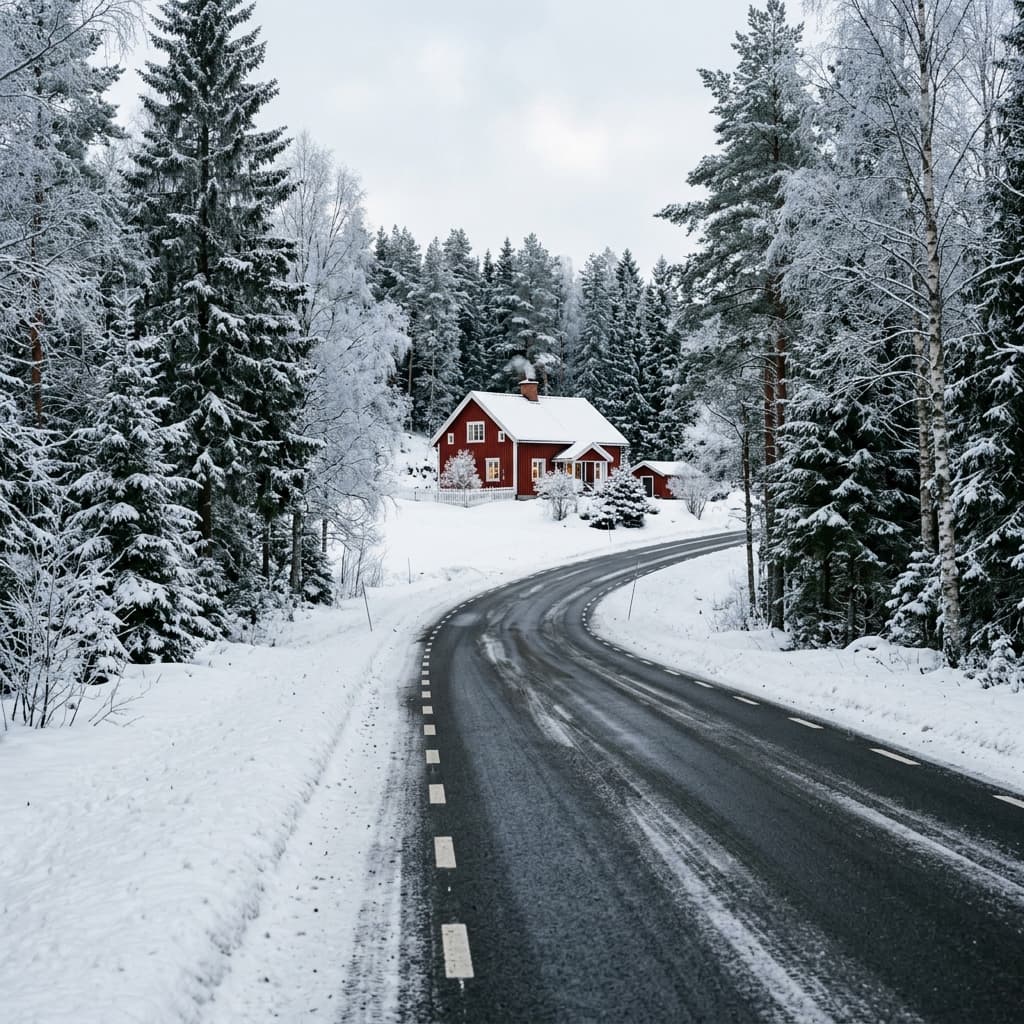
Endless pine forests, pristine lakes, snowy conditions, and those iconic red wooden houses ("Falu red") stretch across all three nations.
It's incredibly easy to confuse them without knowing the specific road markings and language differences.
The Cheat Codes
- ✓Road Edge Lines: Sweden uses short, dashed white lines on the outside edge. Finland utilizes solid white edge lines. Norway frequently uses solid yellow center lines.
- ✓Street Signs: Norwegian pedestrian crossing signs have a white background. Swedish and Finnish signs use a yellow background.
- ✓Language: Sweden uses Ä and Ö. Norway uses Æ and Ø. Finland uses a massive amount of double vowels (like Kaupunki or Täällä).
4. USA vs. Canada
The North American Border Blur
Identical suburban sprawling layouts, identical vehicle models, similar architecture, and shared biomes make these countries tough to distinguish.
For example, the Pacific Northwest of the US looks virtually identical to British Columbia in Canada.
The Cheat Codes
- ✓Speed Limit Signs: The US uses classic white rectangular signs saying "SPEED LIMIT". Canada uses signs that say "MAXIMUM" in km/h.
- ✓Road Paint: Canada heavily favors single solid yellow center lines on two-way residential and rural roads. The US almost universally mandates double yellow lines.
5. Thailand vs. Cambodia vs. Indonesia
The Southeast Asian Jungle
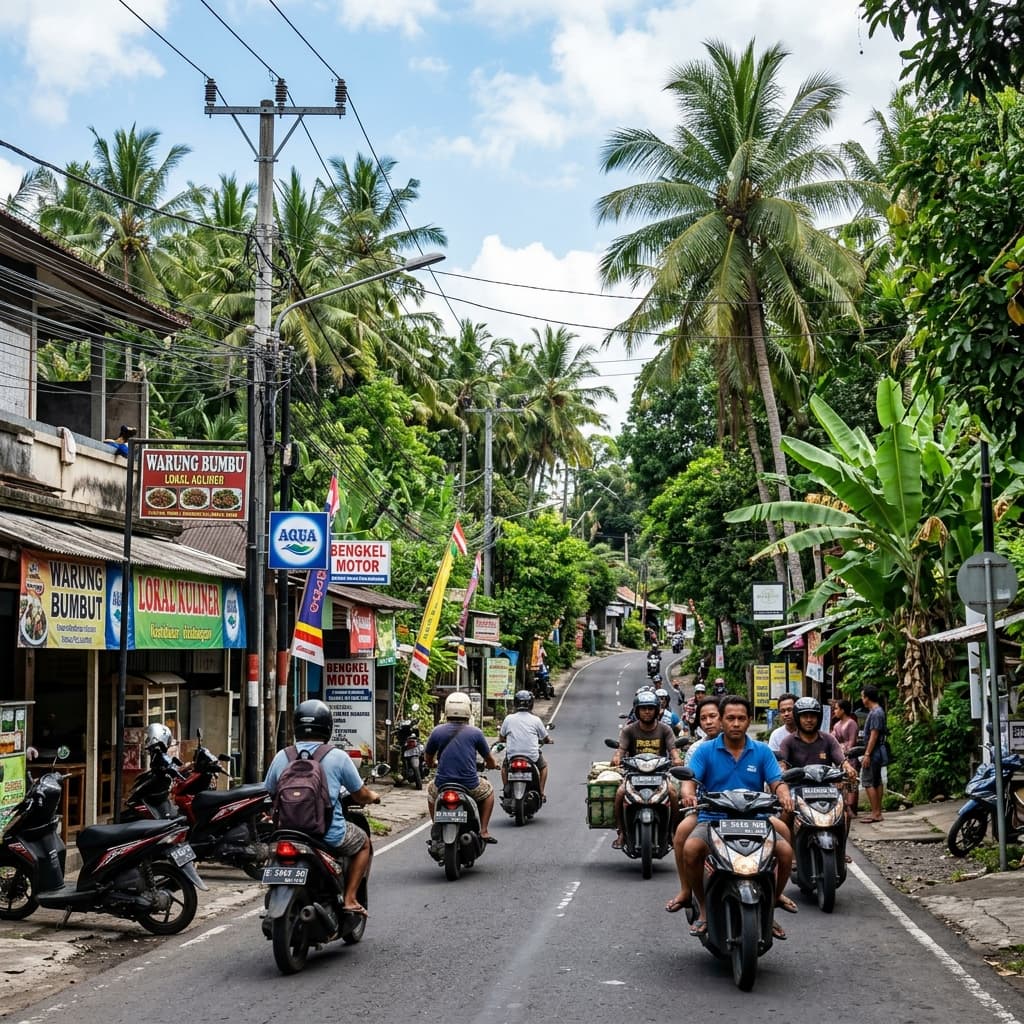
These tropical countries feature dense greenery, incredibly similar mopeds and scooters crowding the roads, and tightly packed urban utility infrastructure.
The heat and humidity almost radiate through the screen, but telling them apart requires close attention to the driving side and alphabet.
The Cheat Codes
- ✓Driving Side: Thailand, Malaysia, and Indonesia drive on the left. Cambodia and the Philippines drive on the right.
- ✓Language Script: Thai characters feature distinctive "circular" loops at their ends. Khmer (Cambodia) is sharper, taller, and blockier. Indonesian uses the standard Latin alphabet.
6. Spain vs. Portugal
The Iberian Peninsula Puzzle
These two countries share the exact same Mediterranean climate, endless olive groves, and dry yellow dirt.
Combined with very similar Romance languages, guessing between them can feel like a coin flip.
The Cheat Codes
- ✓License Plates: Historically, Portuguese plates featured a distinctive yellow vertical strip on the right side. Spanish plates only have the standard blue EU strip on the left.
- ✓Camera Angles: A large portion of Portugal was recorded with a specialized low-angle camera, making you feel closer to the road compared to Spain.
7. Peru vs. Bolivia vs. Chile
The Andean Challenge
The dramatic and imposing Andes mountain range stretches across all three countries.
You will frequently find barren, high-altitude dirt roads that look completely alien, leaving you guessing which of the three you're in.
The Cheat Codes
- ✓Sign Posts: Chile utilizes highly distinct white road sign poles. If you see an all-white wooden or metal pole, it's likely Chile.
- ✓Car Meta: Bolivia is famous for having a visibly white or silver Google car. If you see the car's body, lock in Bolivia.
- ✓Architecture: Bolivian rural houses are frequently constructed from exposed red brick. Peruvian houses are much more likely to be painted, plastered, or made of adobe.
8. Romania vs. Hungary vs. Bulgaria
The Balkan Confusion
These nations share similar Eastern Bloc architectural remnants, expansive agricultural plains, and overlapping climates.
Without obvious language clues, you have to look closely at the infrastructure.
The Cheat Codes
- ✓The "Holey" Poles: Romania uses concrete utility poles with distinct, uniform circular holes cast all the way up. Hungary predominantly uses solid "A-frame" concrete poles.
- ✓Winter Coverage: A massive chunk of Bulgaria's Street View was recorded in the dead of winter. Bare trees, bleak skies, and snow patches point to Bulgaria.
9. Argentina vs. Uruguay
The South American Plains
The "Pampas" region looks practically identical in both countries—endless flat, grassy plains under massive open skies.
Both nations also speak Spanish, meaning you can't rely on language alone.
The Cheat Codes
- ✓The Black Car Meta: Argentina is infamous for having a visible black Google car across a huge percentage of its rural locations.
- ✓Road Signs: Uruguay uses very distinct, thick white concrete posts to hold up its road signs, often painted with a black stripe at the base.
10. Japan vs. South Korea
The East Asian Metropoles
Both countries feature highly developed urban environments and massive amounts of commercial signage.
Surprisingly, they also share very similar lush, mountainous terrain in their rural areas, which can easily trick players.
The Cheat Codes
- ✓Driving Side: The easiest giveaway. Japan drives on the left. South Korea drives on the right.
- ✓Language: South Korean (Hangul) characters heavily feature circles and ovals. Japanese characters (Hiragana and Kanji) rarely utilize perfectly enclosed circles.
- ✓Architecture & Mirrors: Japan places orange traffic mirrors at nearly every narrow intersection. Japanese houses often feature distinct dark-tiled, slightly curved roofs.
Ready to Test Your New Knowledge?
Mastering location guessing isn't just about raw geographical knowledge; it's about paying attention to the tiny, almost invisible details that humans have built into the landscape around them. From the paint on the road to the shape of a utility pole, the world is covered in clues waiting to be read.